Scaling HUMN’s Insurtech Platform into a Trustworthy, Growth-Ready Product.
Executive Summary
HUMN — an insurtech focused on improving driver behaviour, fleet safety, and insurance outcomes using connected data and AI.
Product Environment
A B2B and B2B2C platform serving fleet managers, drivers, insurers, and brokers, combining telematics, behavioural data, and predictive risk modelling.
Growth-stage insurtech in a regulated insurance ecosystem
AI-driven insights influencing safety outcomes and insurance decisions
Multiple user types with varying levels of data literacy
Increasing commercial traction requiring a more mature product experience.
The Business Problem
As HUMN expanded, users struggled to consistently understand:
What the product was telling them
Why certain behaviours or risks were flagged
What actions they should take next
This created three strategic risks:
Lower retention due to unclear ongoing value
Reduced engagement with key insights
Weakened trust in AI-driven recommendations
Product Context
Product
HUMN Insurtech Platform — delivering behavioural insights and risk intelligence for fleets, drivers, and insurers.
Role
UX Lead — accountable for UX strategy, research direction, design execution, and optimisation across the platform.
Mandate
Scale the product experience to support growth, improve retention, and strengthen trust in AI-driven insights within a regulated environment.
Impact
15% increase in user retention by simplifying end-to-end journeys and clarifying value across core workflows
25% increase in user acquisition supported by clearer onboarding and improved product-market fit
Improved decision confidence through clearer presentation of behavioural risk and AI-driven insights
Reduced friction across key journeys by prioritising usability, accessibility, and consistency
Established scalable UX foundations to support product growth without increasing complexity
Context & Business Stakes
The Scale
Organisation
HUMN — a fast-growing insurtech platform focused on improving driver behaviour, fleet safety, and insurance outcomes using connected data and AI.
Product Environment
A B2B and B2B2C platform serving fleet managers, drivers, insurers, and brokers, combining telematics, behavioural data, and predictive risk modelling.
Operating Context
Growth-stage insurtech in a regulated insurance ecosystem
AI-driven insights influencing safety outcomes and insurance decisions
Multiple user types with varying levels of data literacy
Increasing commercial traction requiring a more mature product experience
The Challenge
As HUMN grew, several risks began to limit adoption, retention, and long-term scalability:
Fragmented end-to-end journeys
Core workflows were inconsistent across the platform, making it harder for users to understand value and complete tasks confidently. This increased friction and weakened retention over time.Unclear insight prioritisation
Data-heavy screens surfaced too much information at once, slowing decision-making and reducing engagement with the most important behavioural and risk signals.Accessibility and usability gaps
Inconsistent application of accessibility and usability standards created barriers for some users, limiting broader adoption and increasing reliance on support.Opaque AI-driven insights
Behavioural and risk scores lacked sufficient explanation, reducing user confidence in recommendations and making it harder to act on insights.
Left unaddressed, these risks threatened user trust, product adoption, and HUMN’s ability to scale sustainably in a competitive insurtech market.
Research & Insights
-
Research
I combined qualitative and quantitative inputs to understand where the experience was breaking down and why.
UX audit
Reviewed core workflows to identify usability issues, inconsistencies, and sources of cognitive load.User and stakeholder interviews
Spoke with fleet managers, internal teams, and customer-facing roles to understand goals, constraints, and recurring pain points.Competitive benchmarking
Analysed comparable fleet risk and analytics platforms to identify industry patterns, gaps, and opportunities for differentiation.Customer success data review
Synthesised support tickets, feedback, and account insights to identify high-friction areas impacting adoption and satisfaction.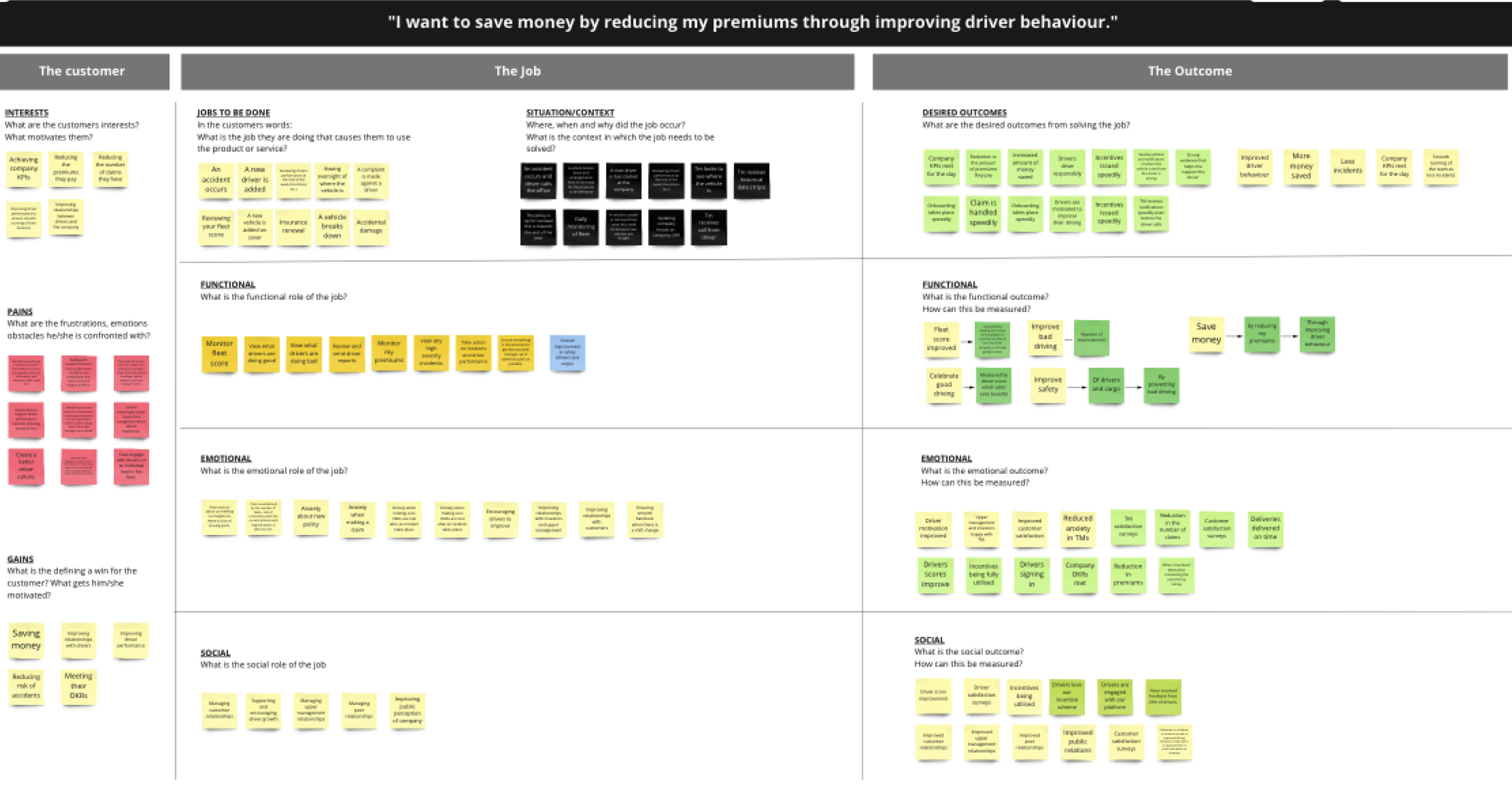
-
Strategy
Based on the research, I aligned UX efforts around scalability, clarity, and speed of decision-making.
Established a formal UX function that integrated research and design into product decision-making.
Introduced consistent interaction patterns and foundations to support scalability and reduce UX debt.
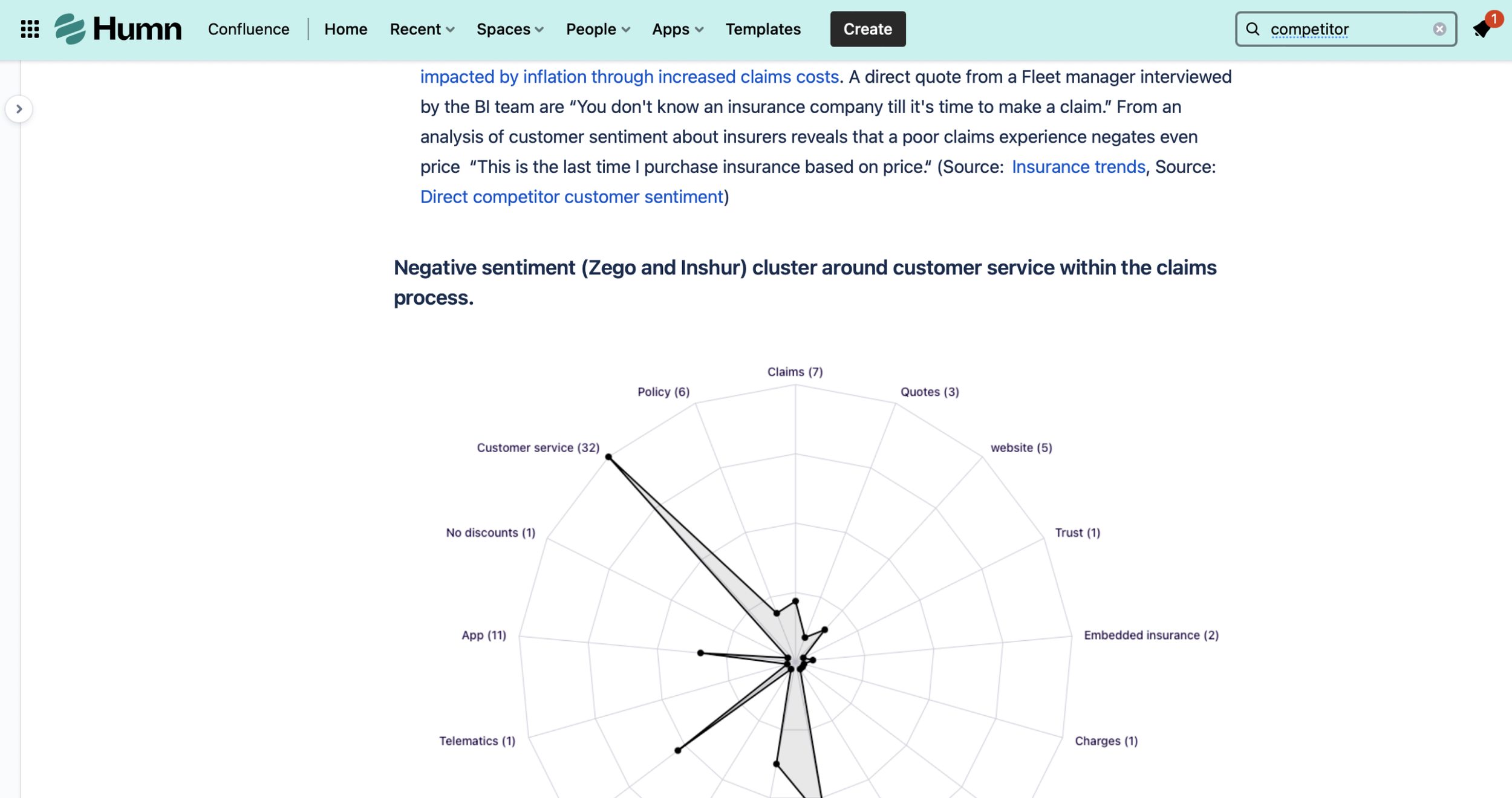
Used competitor insights to prioritise areas where clearer insight delivery could differentiate the product.
-
Key Findings
Research surfaced a consistent set of user needs that informed the design strategy:
Users were time-constrained
Fleet managers prioritised fast, scannable insights over comprehensive data views.Progressive disclosure improved comprehension
Surfacing high-level signals first, with detail on demand, reduced cognitive load and improved understanding of risk metrics.Automation reduced manual effort
Automatically generated reports and notifications reduced the need for manual analysis and follow-up.Strong interest in AI, paired with a need for clarity
Users were enthusiastic about AI-driven risk assessments but needed transparent explanations to trust and act on them.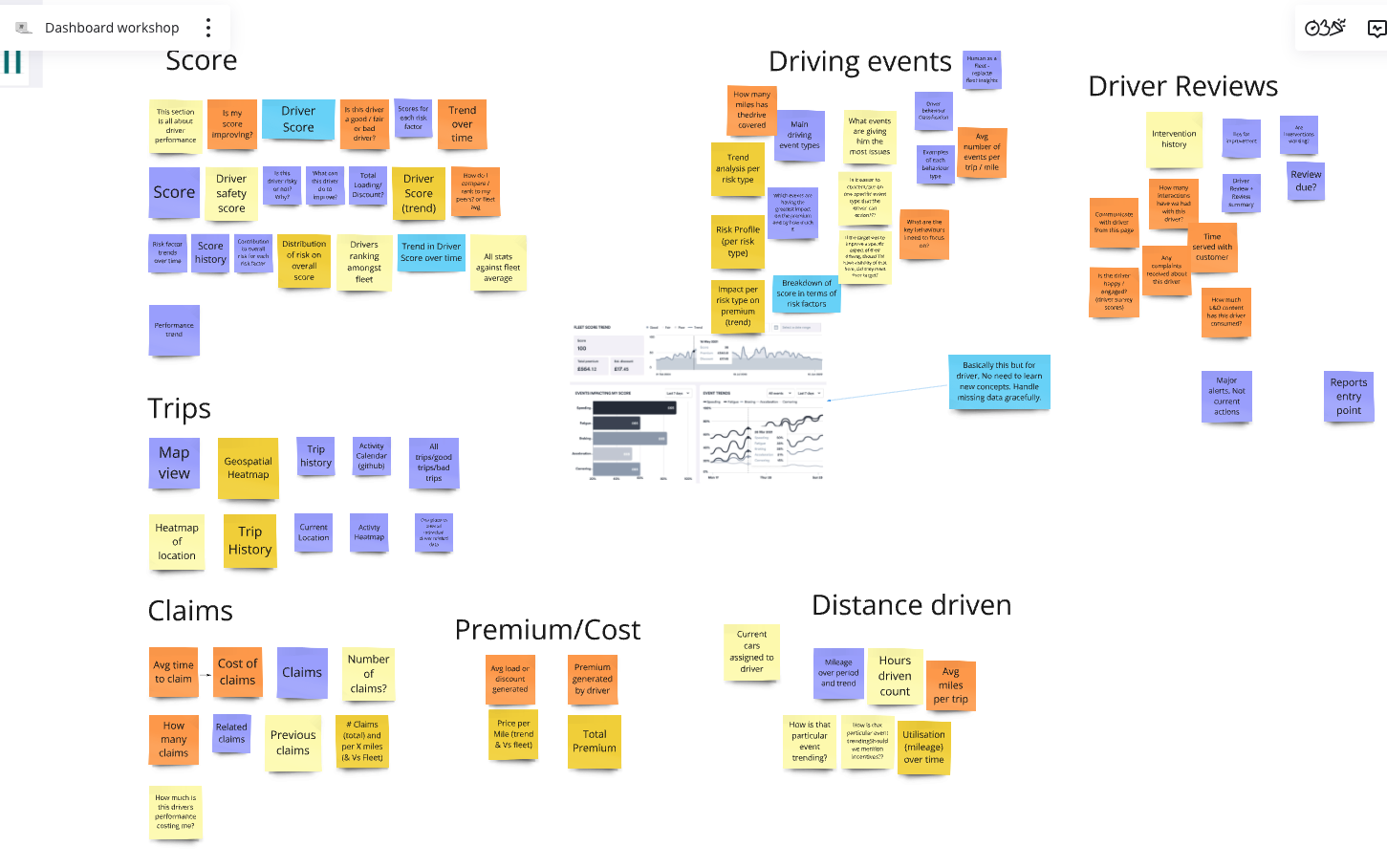
Through user research, usability testing, and cross-functional discovery, I identified three core constraints
1. Insight clarity
Users needed prioritised, actionable insights — not raw behavioural data.
2. Cognitive overload
Too much information was surfaced at once, reducing comprehension and confidence.
3. Opaque intelligence
AI-driven behaviour and risk scoring lacked sufficient explanation to support trust.
Design Strategy
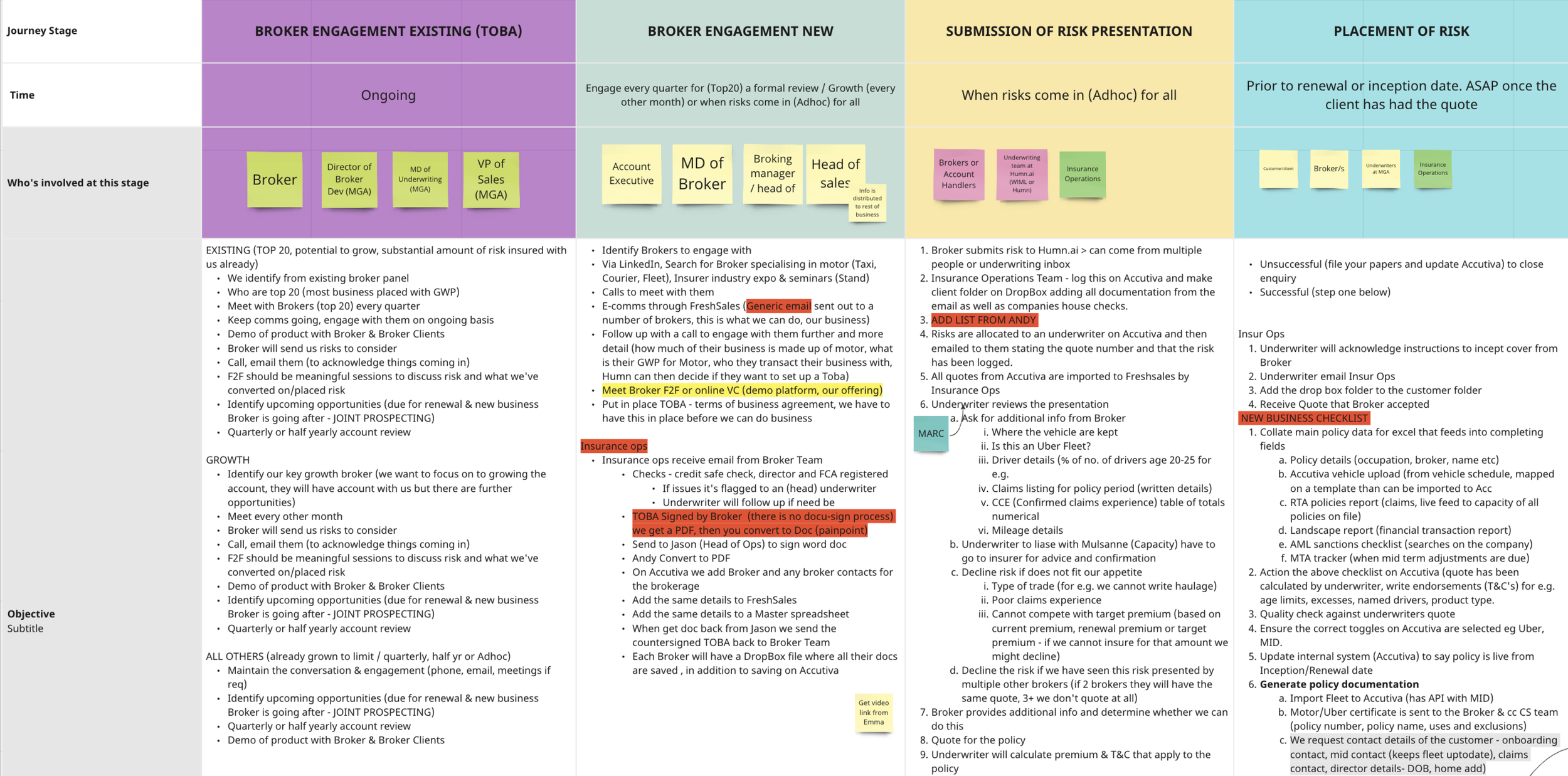
I reframed the UX around clarity, confidence, and continuity, rather than feature completeness.
Strategic Principles
Actionable insights over raw data
Progressive disclosure to manage complexity
Explainable AI as a UX responsibility
Accessibility and consistency as growth enablers
Execution & Leadership
I led UX delivery end-to-end while working closely with product, engineering, and data teams.
Key initiatives included:
Redesigning key journeys to clarify value and next actions
Simplifying dashboards and insight presentation
Introducing consistent interaction patterns across features
Applying accessibility and usability best practices across the platform
Designing clearer explanations for behavioural and risk insights
Supporting onboarding and activation improvements aligned to growth goals
This work balanced short-term gains with long-term scalability, avoiding UX debt as the platform evolved.
Redesigned pages
-
![]()
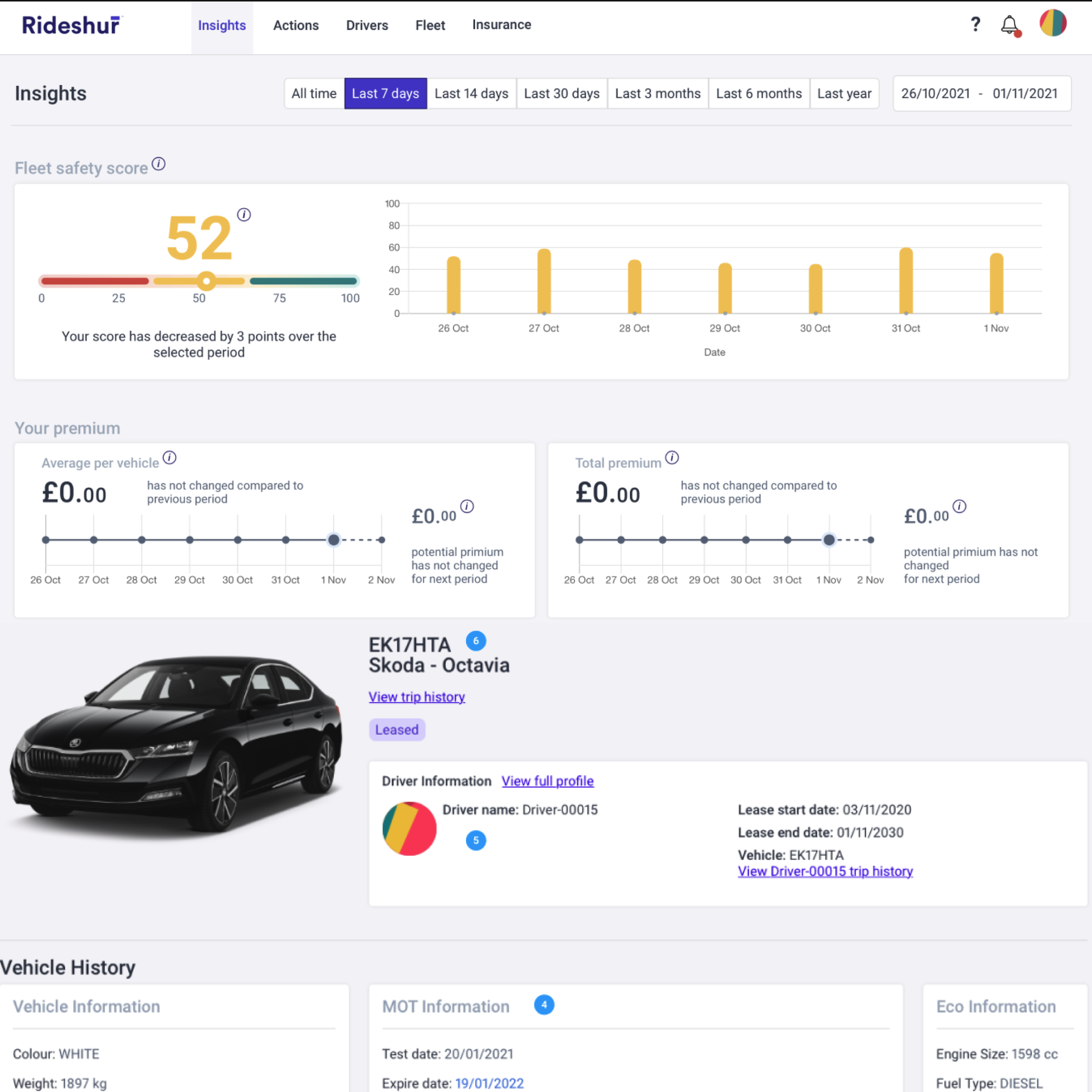
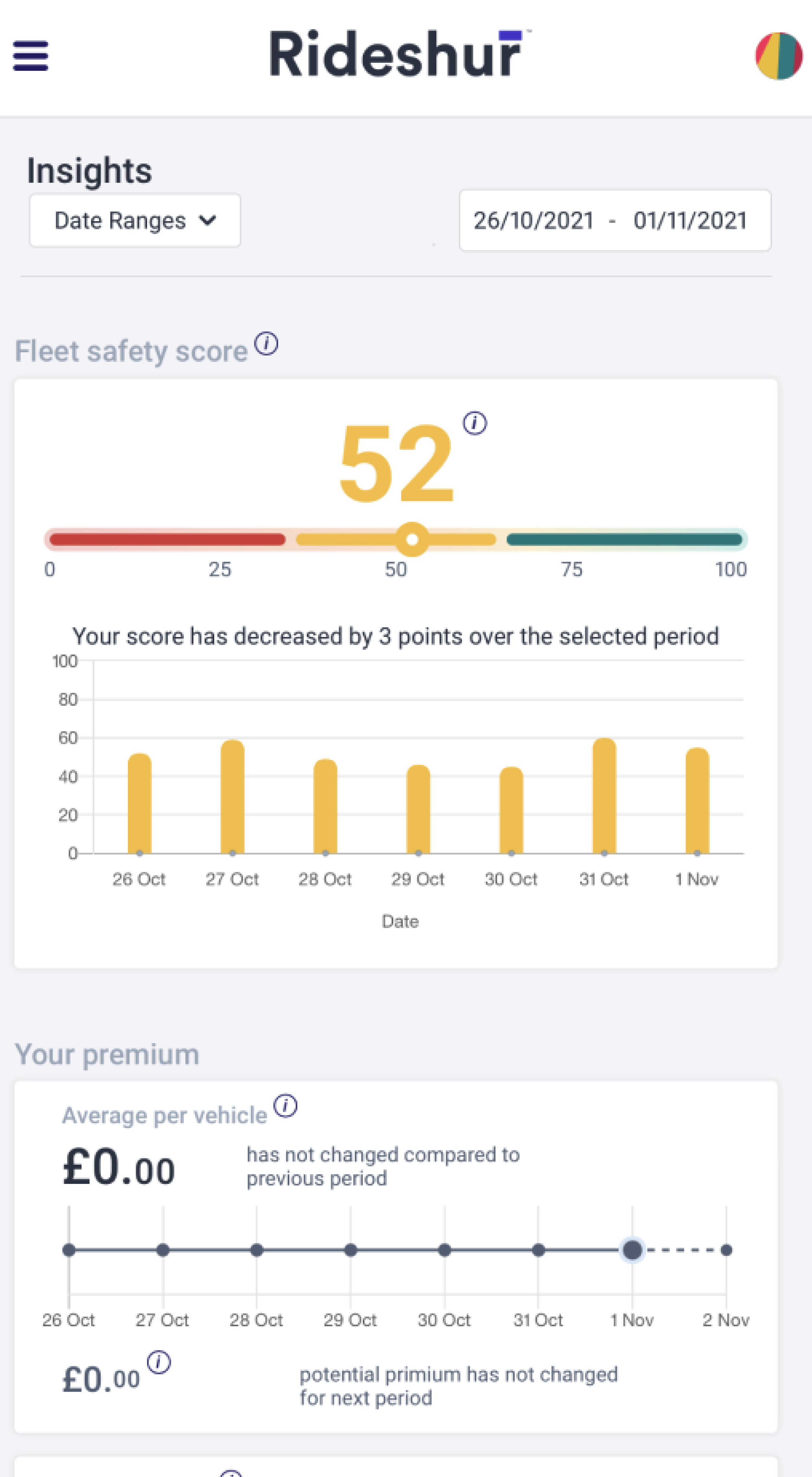
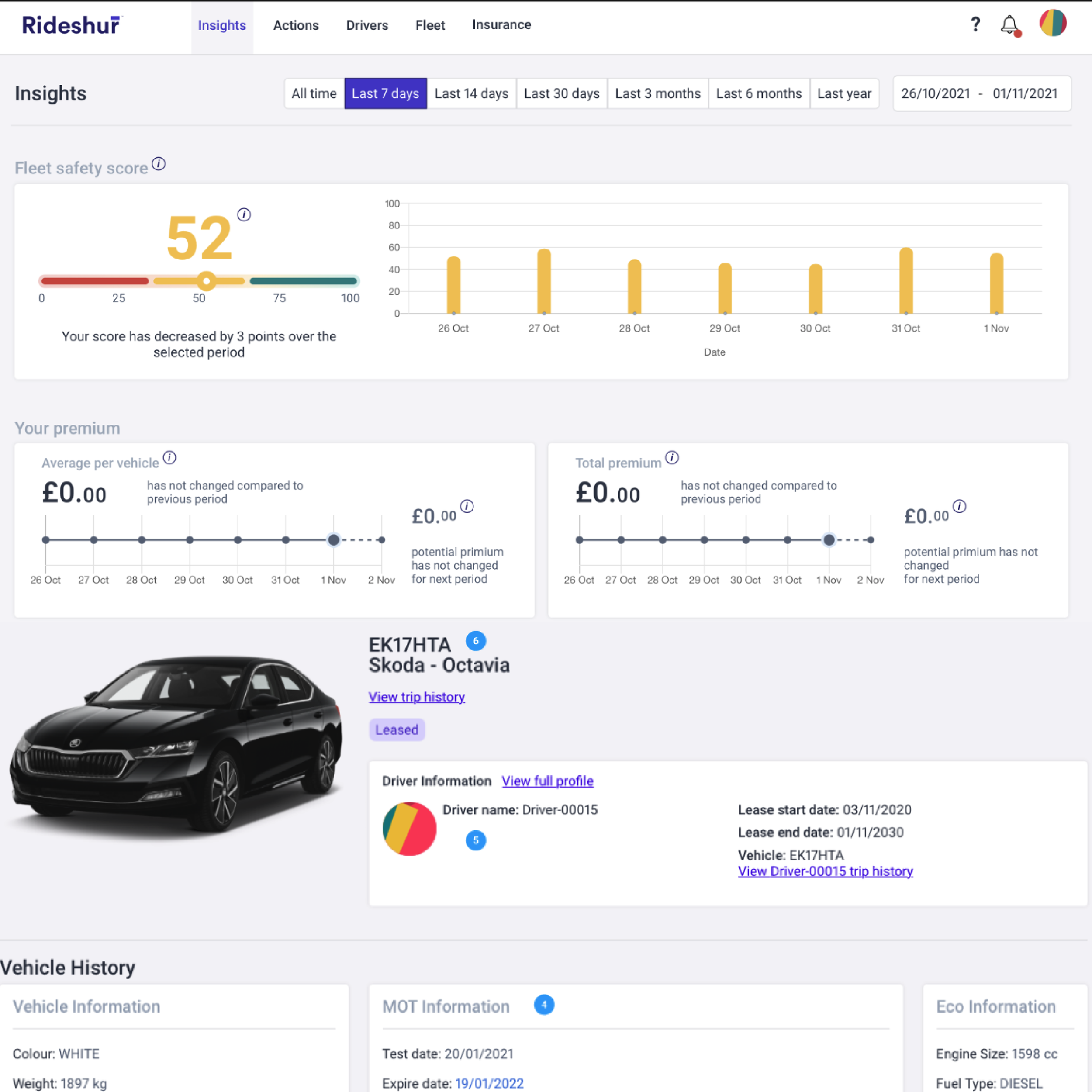
Previous Overview page
Users needed a clear comparison of past and current scores to track progress. It was also difficult to identify which drivers were impacting fleet risk.
-
![]()
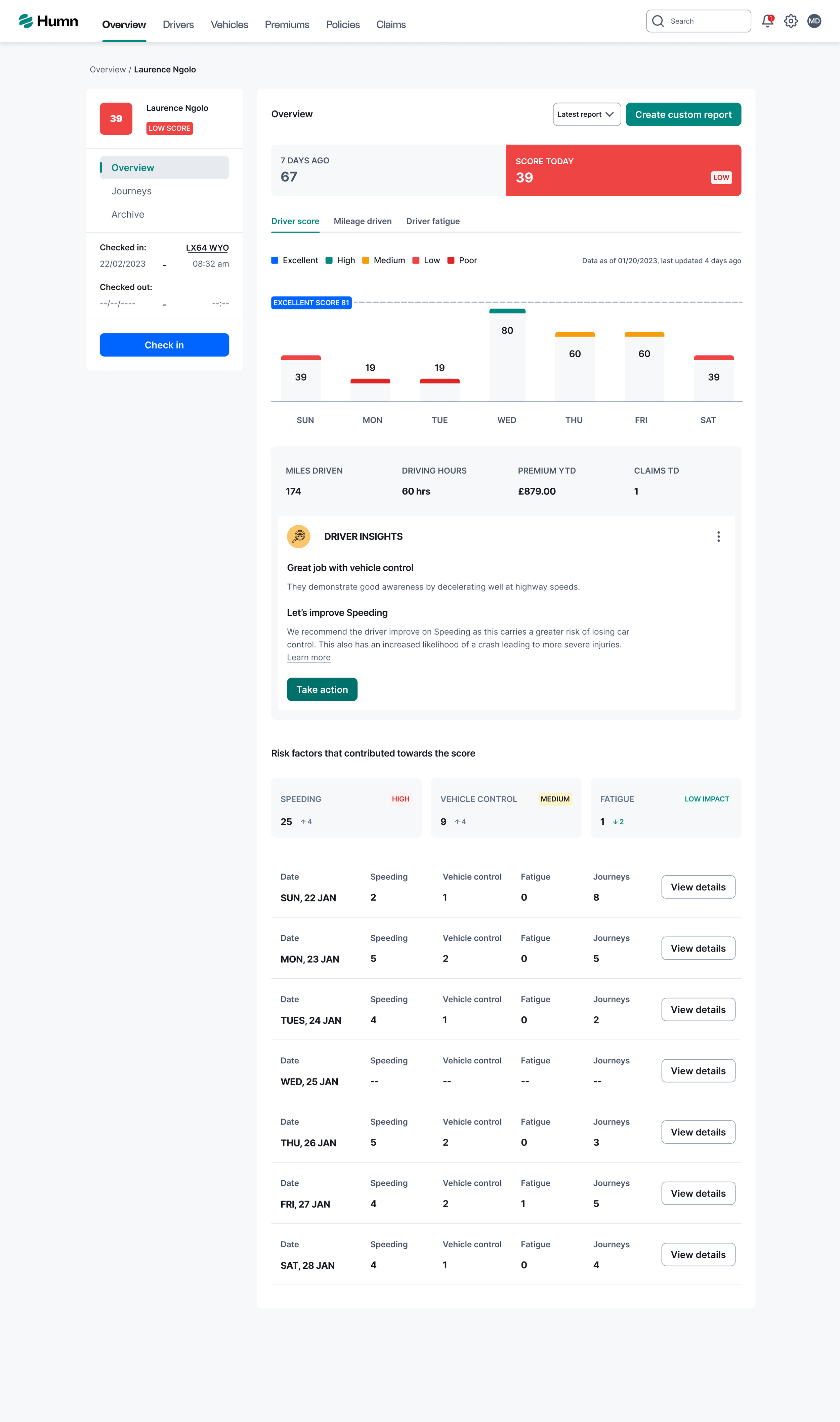
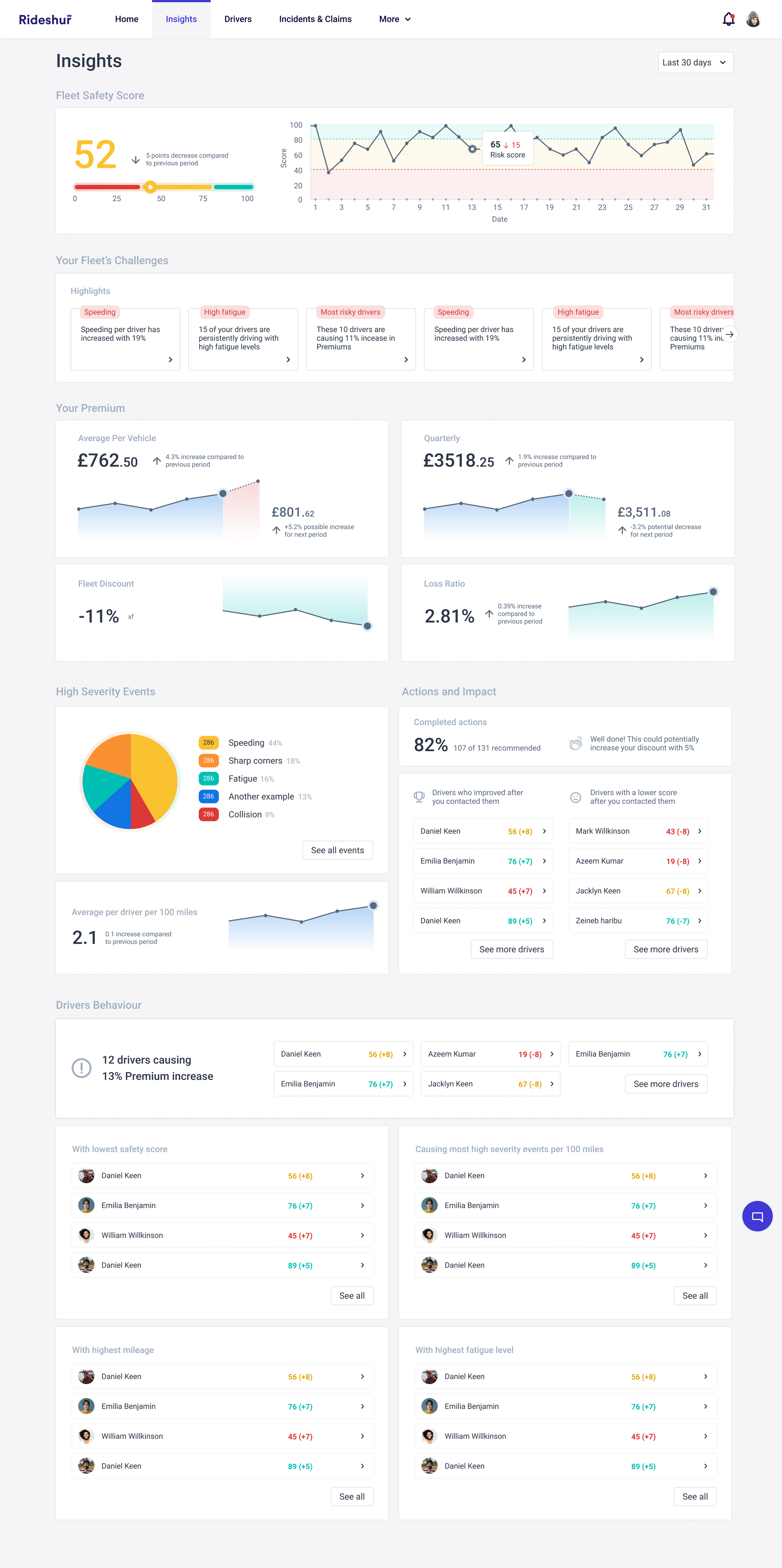
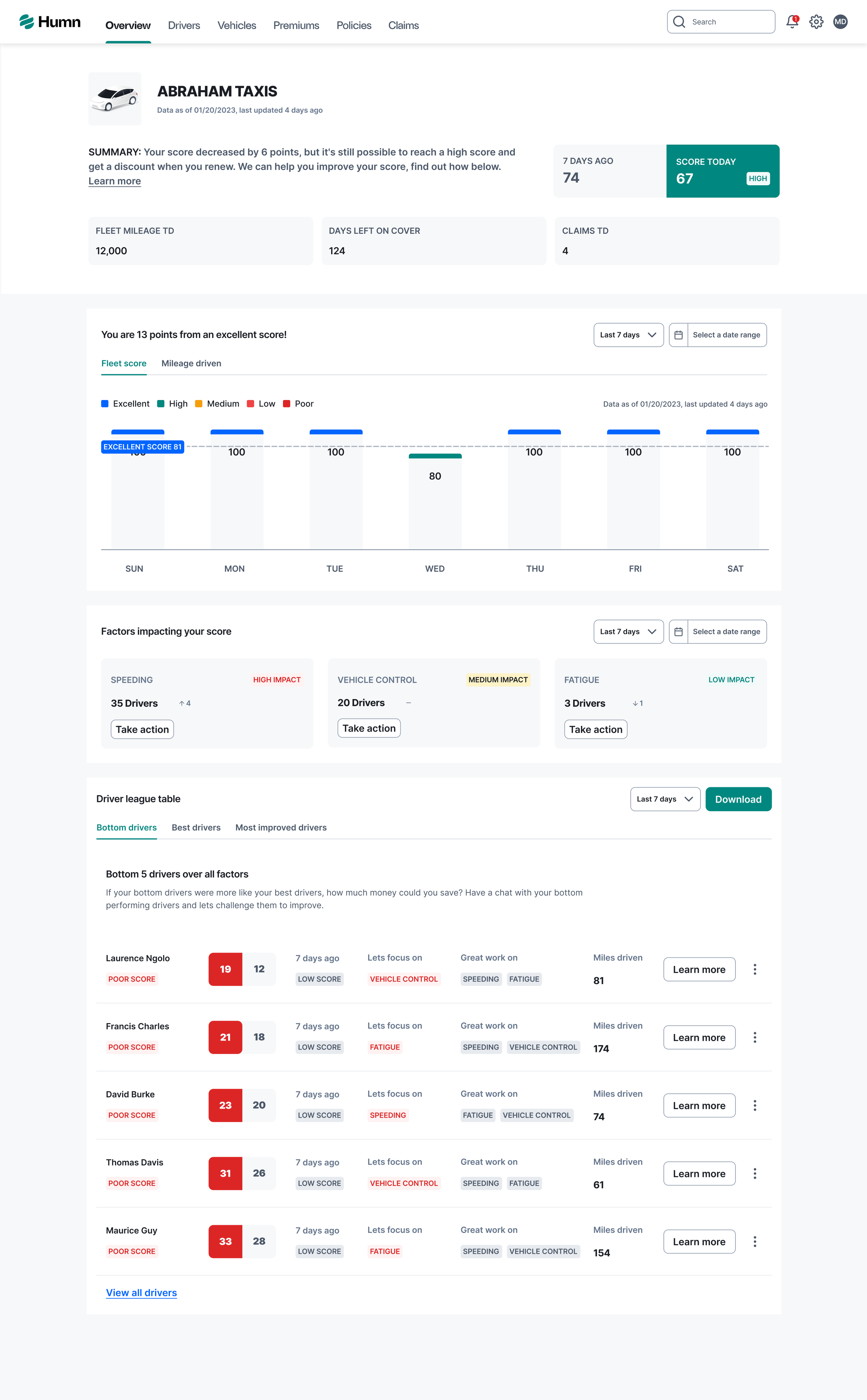
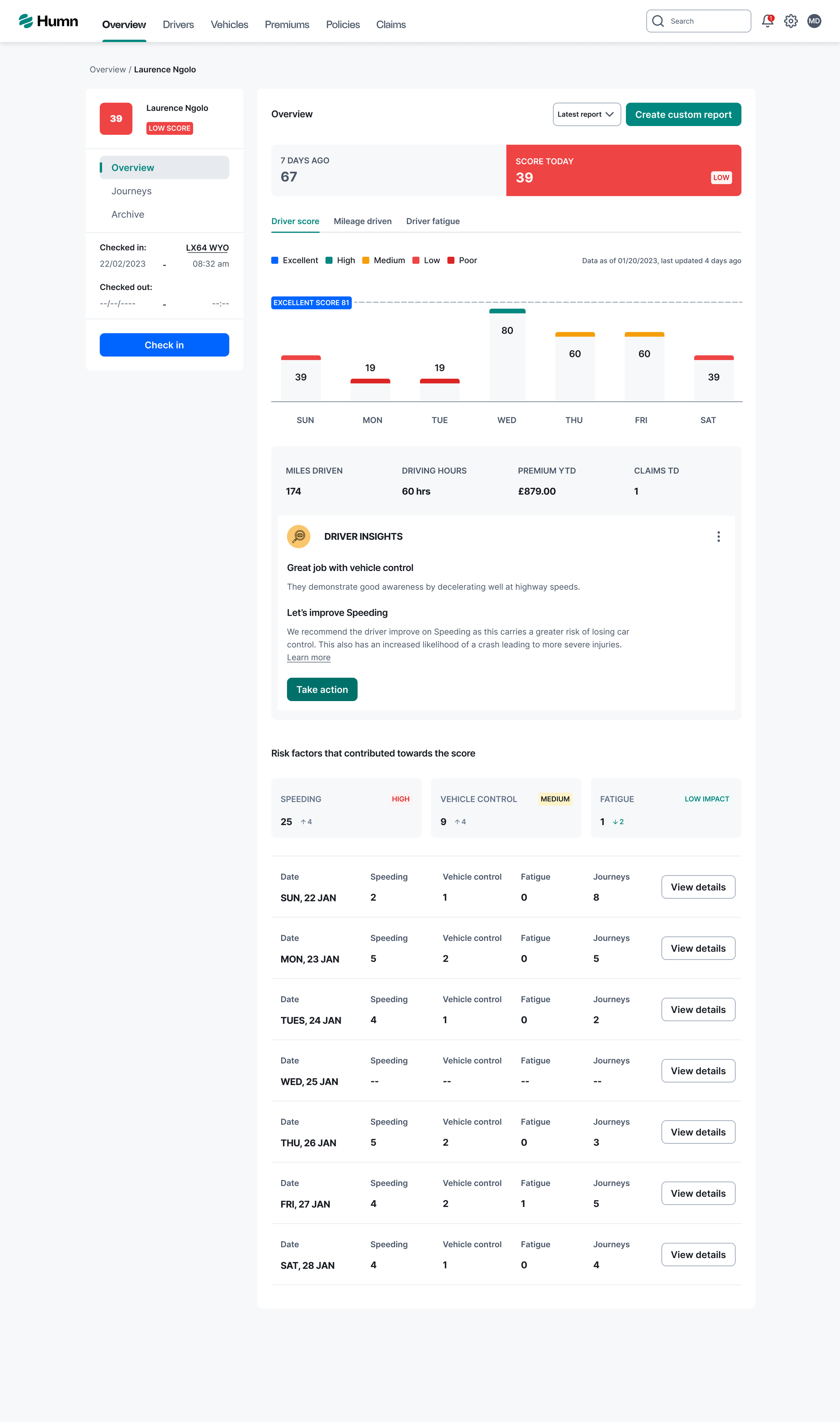
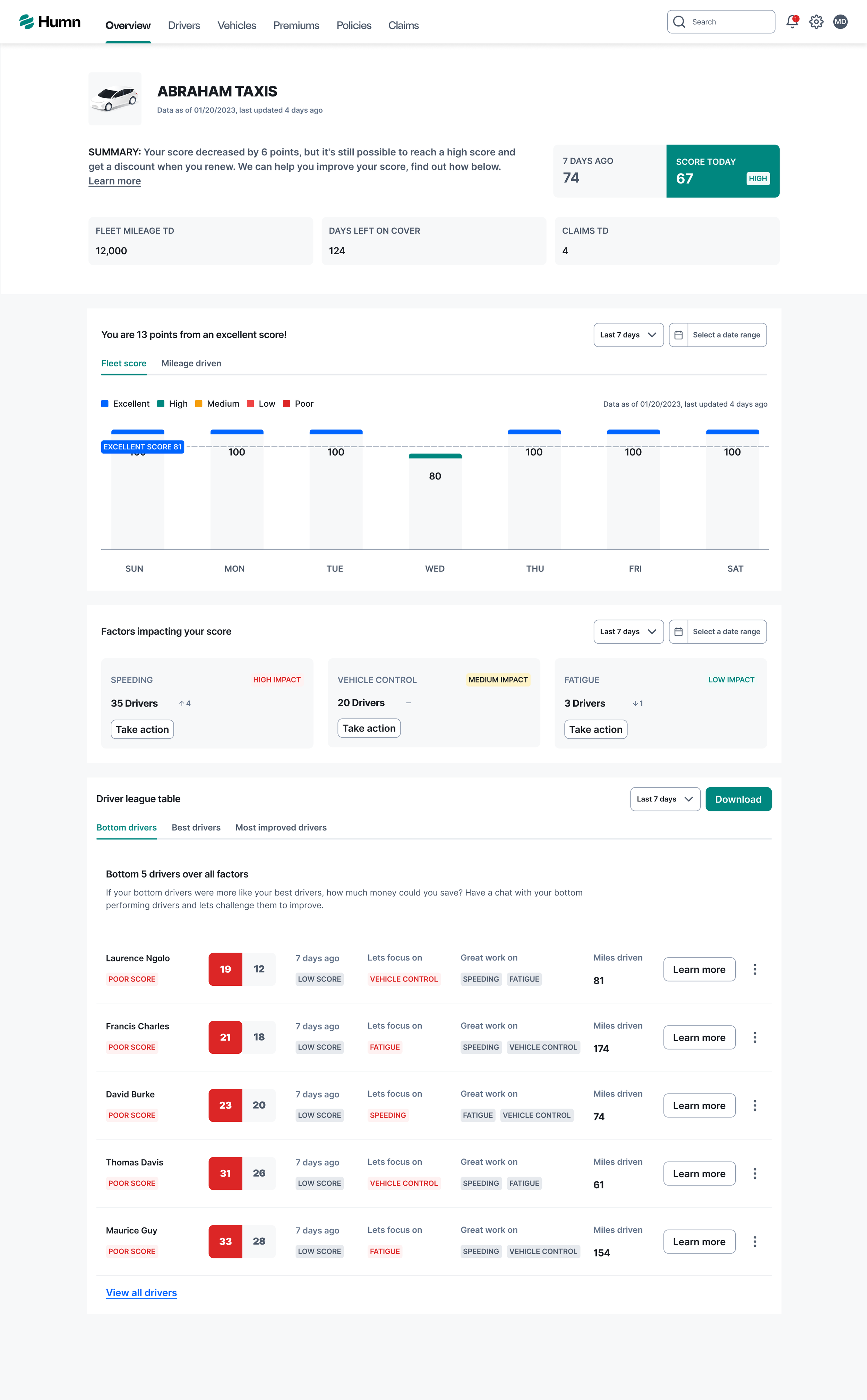
New Overview page
Score comparisons and risk insights were designed and tested for clarity and ease of use. A new design system was implemented to ensure consistency.
-
![]()
Previous drivers list page
The same issues persisted with the drivers profile page were colours and charts were used inconsistently and the important data points were beneath the fold.
-
![]()
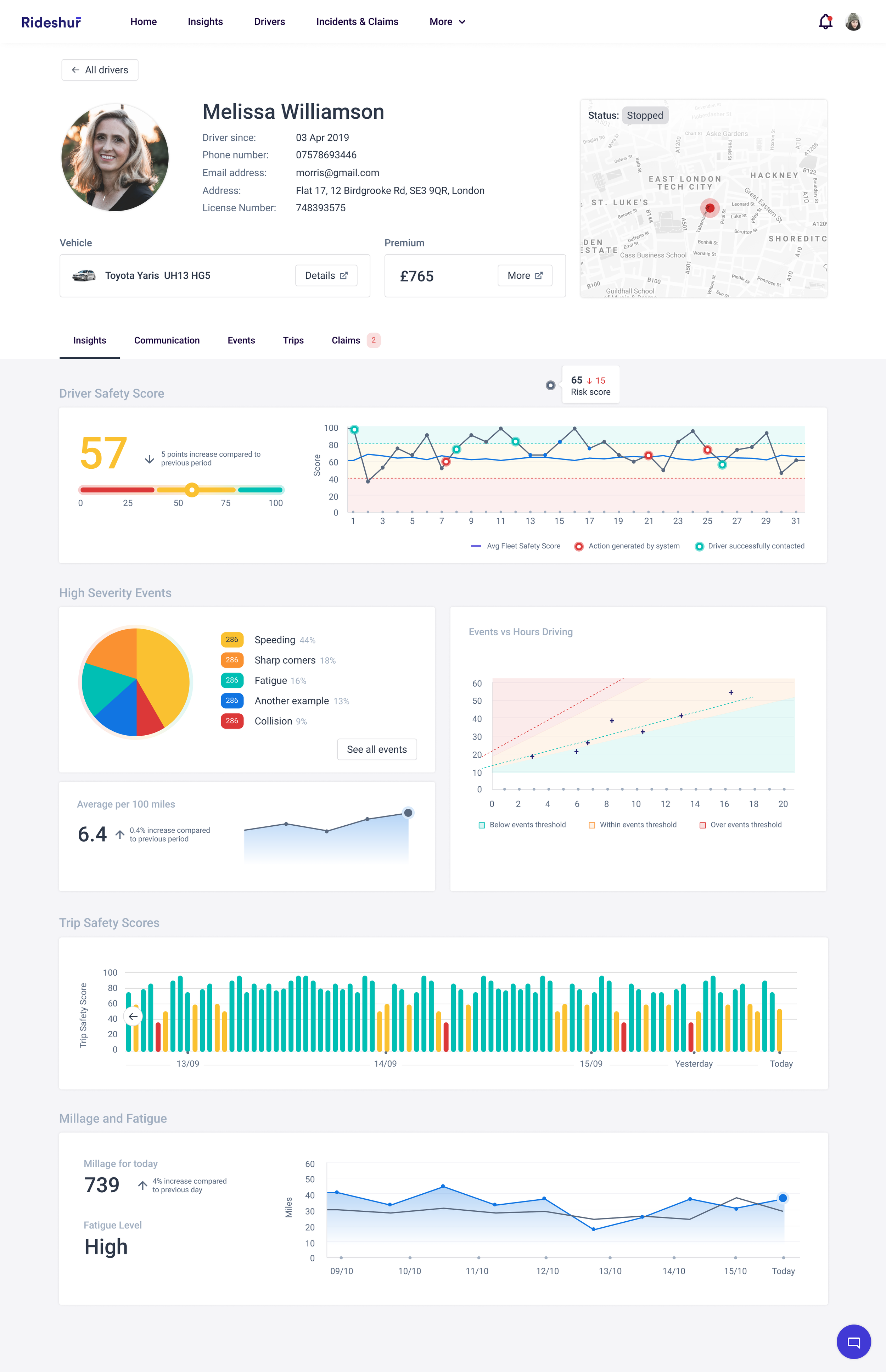
New Drivers profile page
The page was designed based on user needs identified through research. I also analyzed industry best practices and insurer design patterns, incorporating the most effective solutions to enhance usability and engagement.
-
![]()
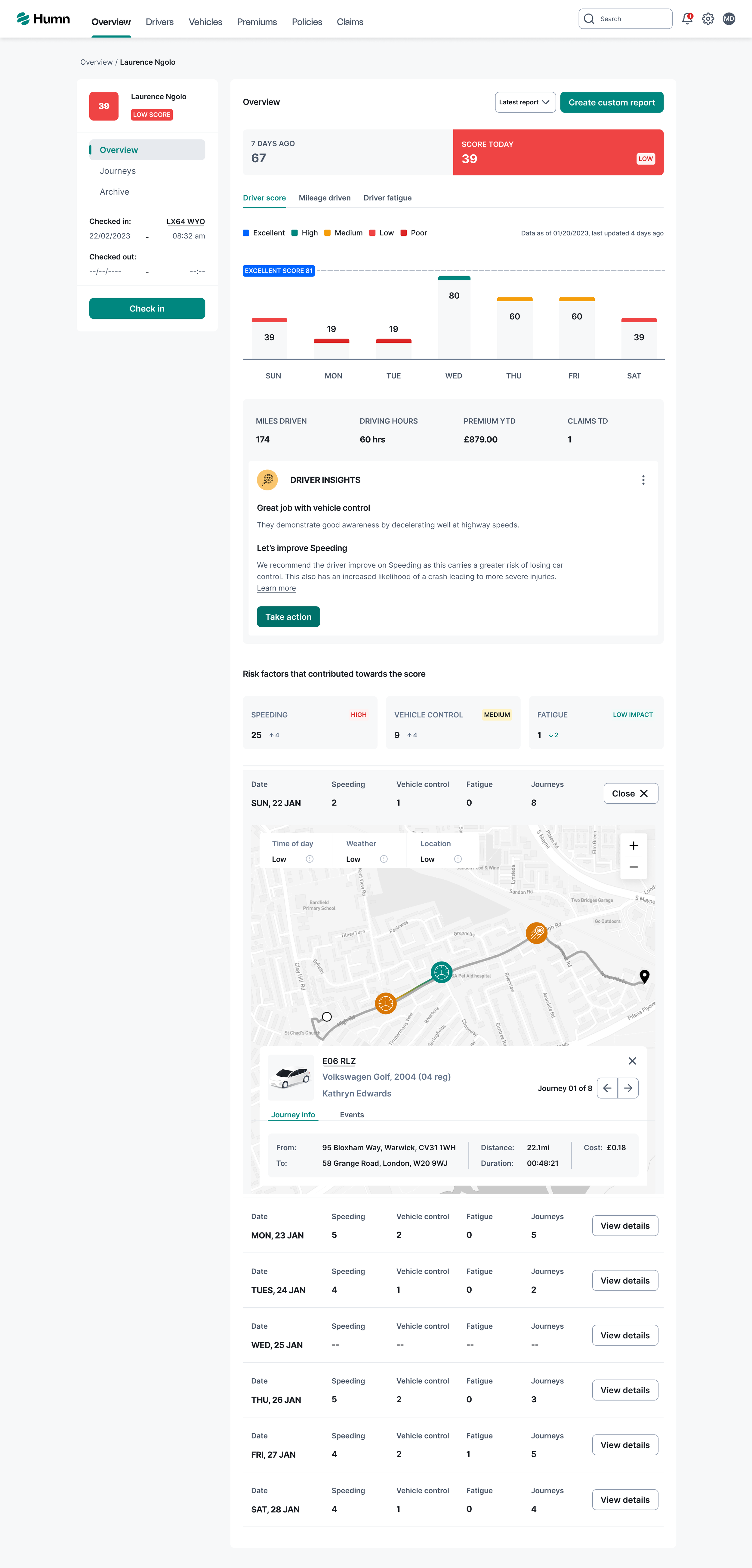
Driver events
Particular attention was paid towards the surfacing of events and allowing the users to drill deeper into the data.
-
![]()
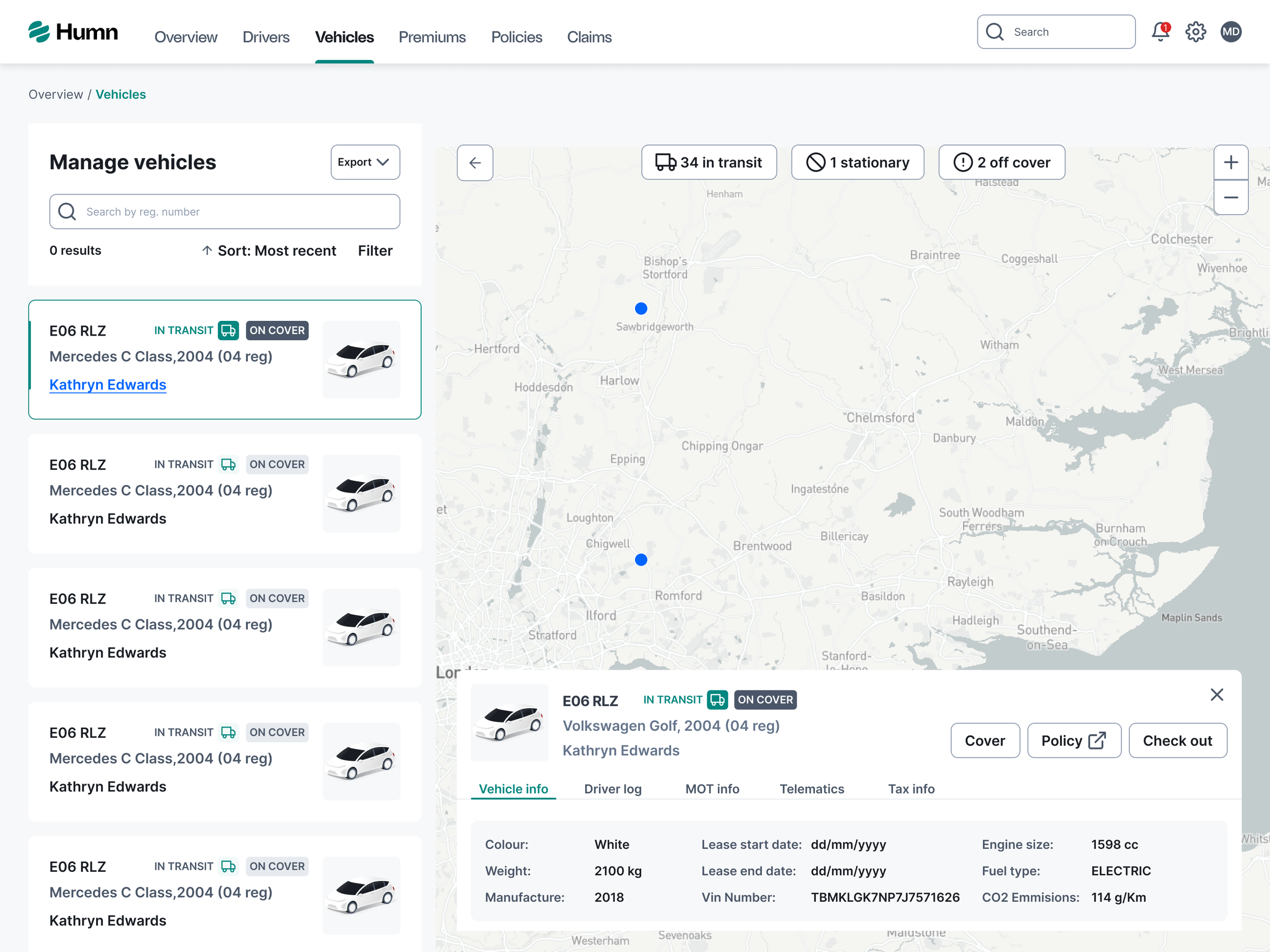
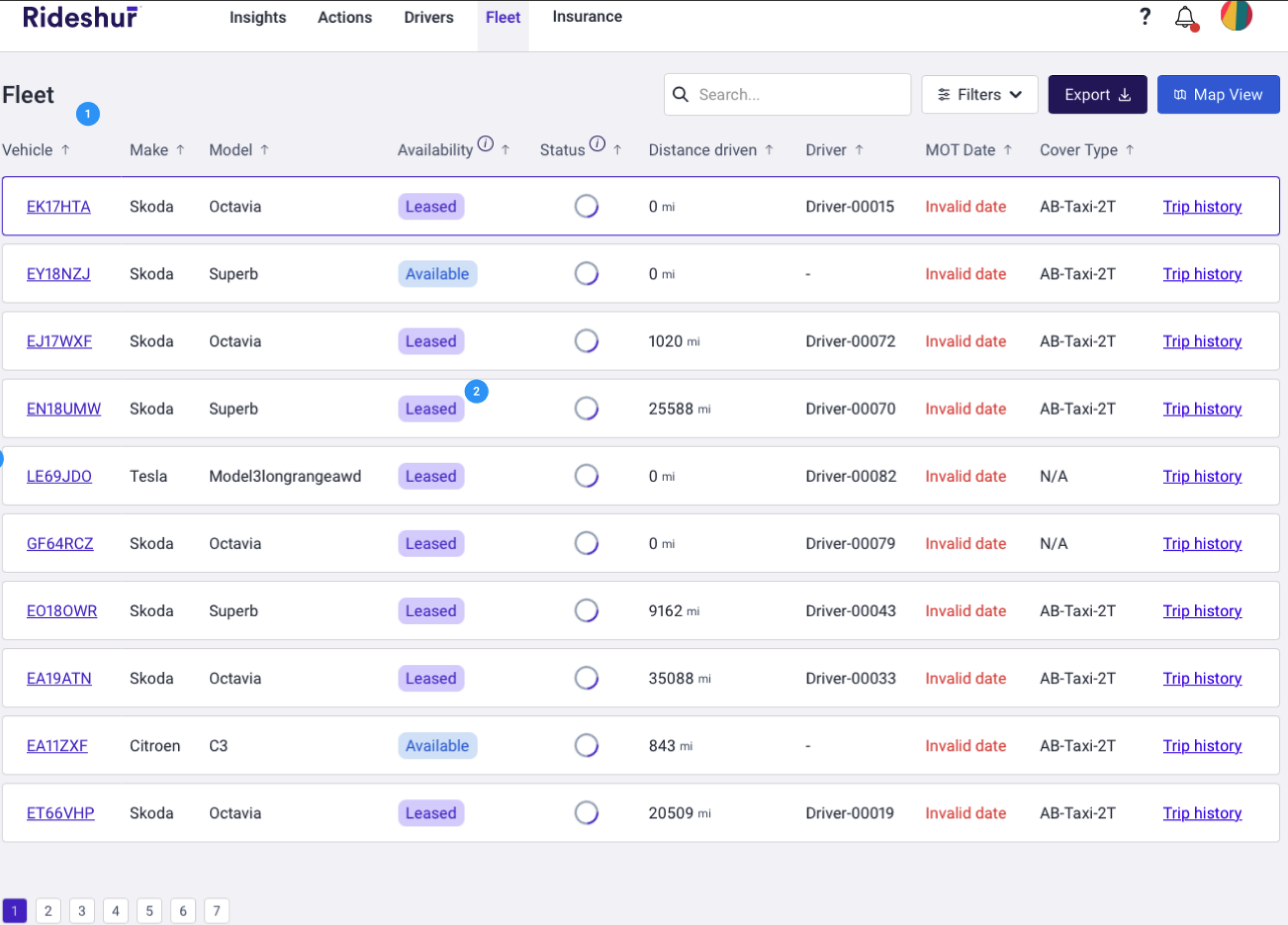
Vehicles list page
Description goes here -
![]()
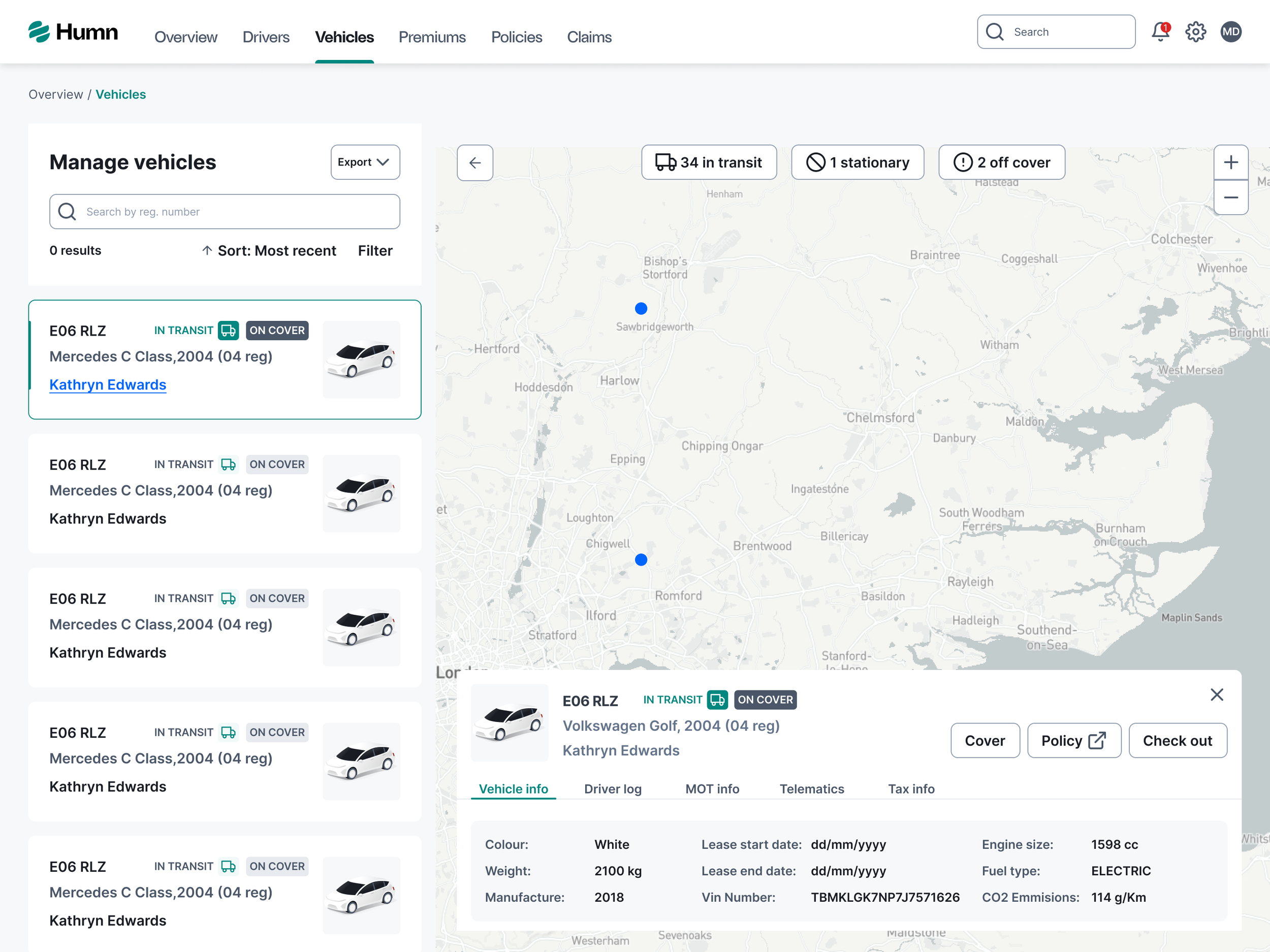
New List Item
Description goes here
Measurement & Validation
Primary metrics
User retention
User acquisition
Engagement with core insights and features
Outcome
15% increase in user retention
25% increase in user acquisition
Improved engagement and clearer understanding of insights, validated through analytics, testing, and user feedback
Outcome
HUMN’s platform matured from a technically capable product into a clearer, more trustworthy experience that could scale with the business.
By improving clarity, consistency, and explainability, the UX now supports:
Stronger user confidence
Improved retention and engagement
A more compelling, growth-ready product proposition
This case demonstrates my ability to:
Lead UX strategy in AI-driven, regulated environments
Scale product experiences without increasing complexity
Translate behavioural and risk data into actionable, trusted insights
Align UX work directly to growth, retention, and product maturity